


In the IBM Power community, we’ve come to expect significant performance gains in each new generation of Power® servers. Over the years, I’ve been impressed with what the IBM Power team delivers in each new product family.
IBM Power performance comparison
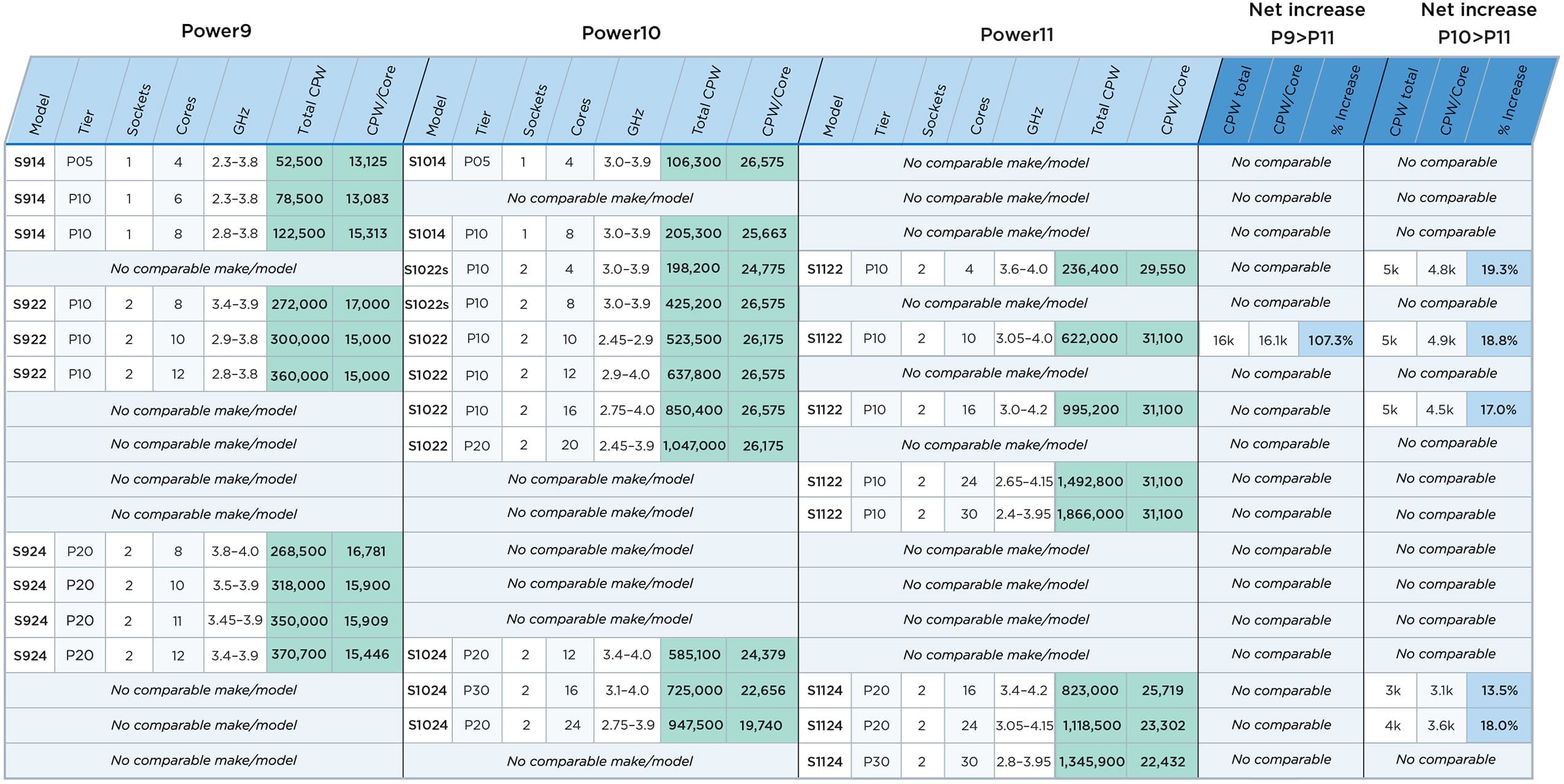
When looking at different generations and releases, we do our best to compare similar models. Below you’ll find commercial processing workload (CPW) performance comparisons spanning Power8, Power9, Power10 and Power11 scale-out server models.
Power9, Power10, Power11 Comparison Chart
Power8, Power9, Power10 Comparison Chart
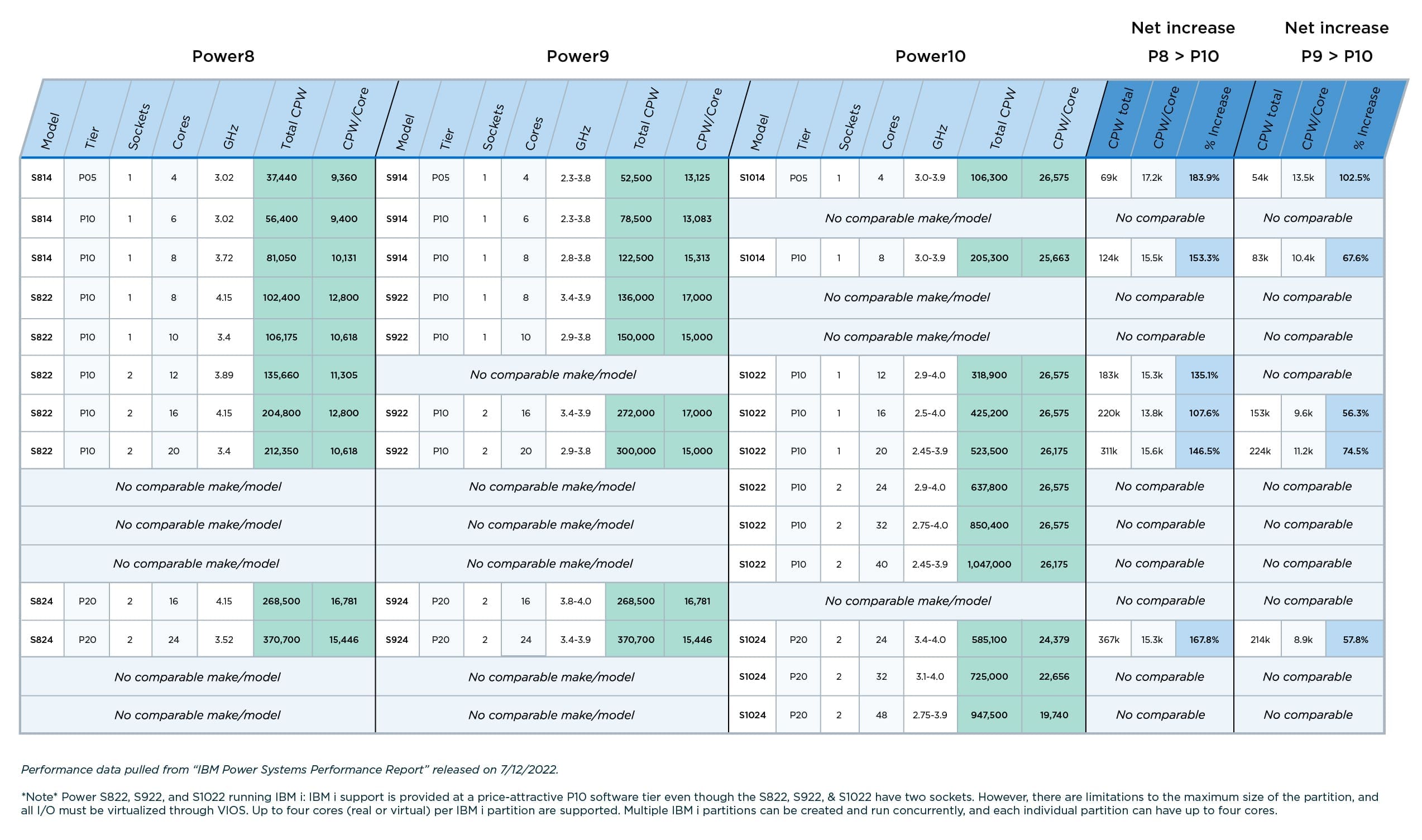
With IBM’s dedication to chip density, core counts per central processing unit (CPU) grow. With our comparison criteria consisting of model type and core count, we’re limited to just a few consistent models for net performance increase calculations. That said, we’ve tried to ensure at least one server for each model type across each of the IBM Power generations reviewed.
What this IBM comparison doesn’t speak to is the investment IBM made to continue its long history of resiliency, dependability and security while remaining dedicated to reducing overall energy consumption. You can learn more about the Power11 benefits that boost performance, uptime and security in our recently published blog.
If you have questions about IBM Power models or if you’re looking to weigh your hardware options, our team would love to help. For expert guidance, contact us here.
Topics: